






Platinum Parasol Fabrics Explained: Premium vs. Standard
-
 How To Weigh Down A Cantilever Parasol September 3, 2021
How To Use A Cantilever Parasol June 7, 2024
How to Choose the Best Position for a Garden Parasol July 18, 2023
How Much Shade Do You Really Need? A Parasol Umbrella Size Breakdown February 20, 2026
What To Look For When Buying A Garden Parasol? June 29, 2024
How To Weigh Down A Cantilever Parasol September 3, 2021
How To Use A Cantilever Parasol June 7, 2024
How to Choose the Best Position for a Garden Parasol July 18, 2023
How Much Shade Do You Really Need? A Parasol Umbrella Size Breakdown February 20, 2026
What To Look For When Buying A Garden Parasol? June 29, 2024 -
What Size Parasols Do Customers Actually Buy? May 30, 2026
How Much Shade Do You Really Need? A Parasol Umbrella Size Breakdown February 20, 2026
Platinum Parasol Fabrics Explained: Premium vs. Standard February 3, 2026
What To Look For When Buying A Garden Parasol? June 29, 2024
How To Use A Cantilever Parasol June 7, 2024

Monthly Archive
Categories
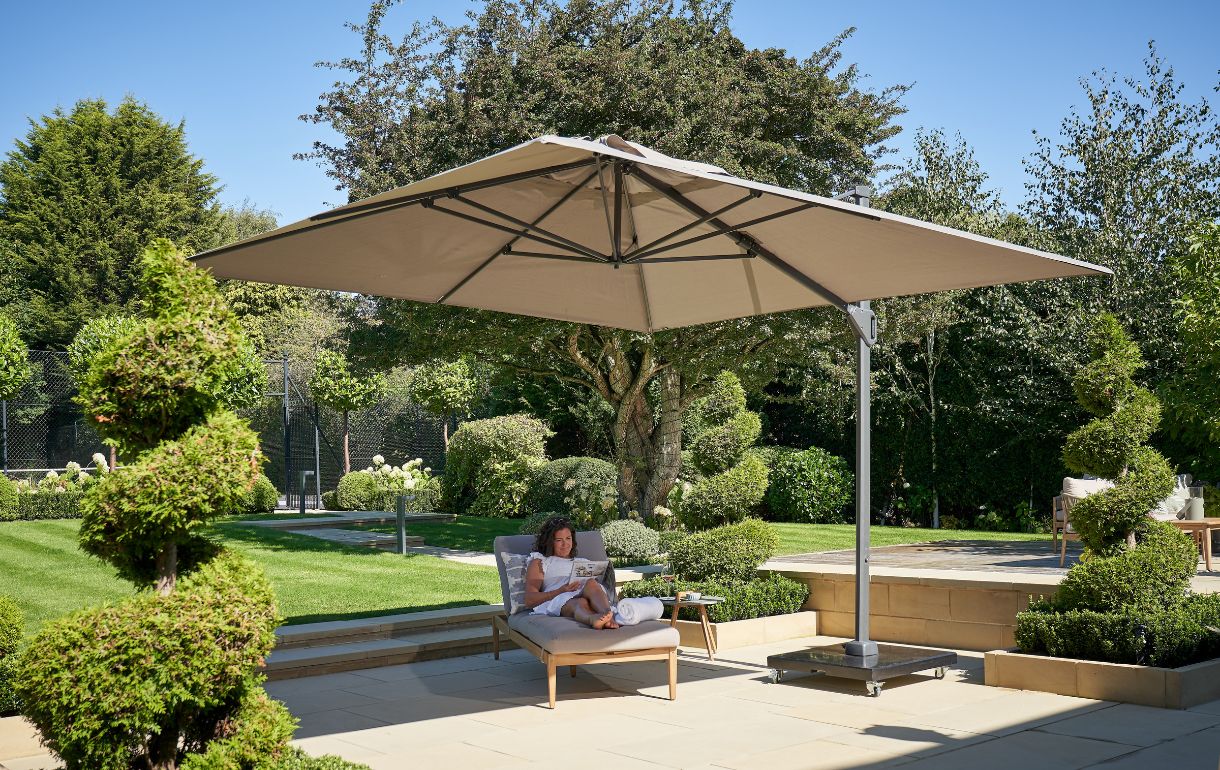
When choosing your parasol, the fabric is about more than just the colour. The fabric defines its durability, UV protection and water resistance. Platinum is a best-selling brand at Just Parasols; they are renowned for high-quality parasols made from weather-resistant fabrics. Platinum offers different levels of fabrics for its range of parasols. Understanding the difference between these fabric classes will help you make the right choice for your outdoor space.
At Just Parasols, we stock both cantilever and table parasols by Platinum. The cantilever parasols are available in two fabric classes, standard and premium. Similarly, the table parasols are also available in two different fabric grades. As a specialist garden parasol retailer, we work closely with Platinum due to their consistent build quality and fabric performance across both domestic and commercial settings. Their parasols are designed to perform reliably in all weather conditions. This consistency allows us to recommend Platinum parasol with confidence. We know that their parasols meet the demands of everyday outdoor use as well as the higher expectations of hospitality and public settings.
Platinum fabric classes explained
Platinum categorises its parasol fabrics into classes, each offering a different level of protection. The main difference between premium and standard fabrics lies in the fibre type, colour process and resistance to the outdoors.
Platinum premium fabric: Spuncrylic
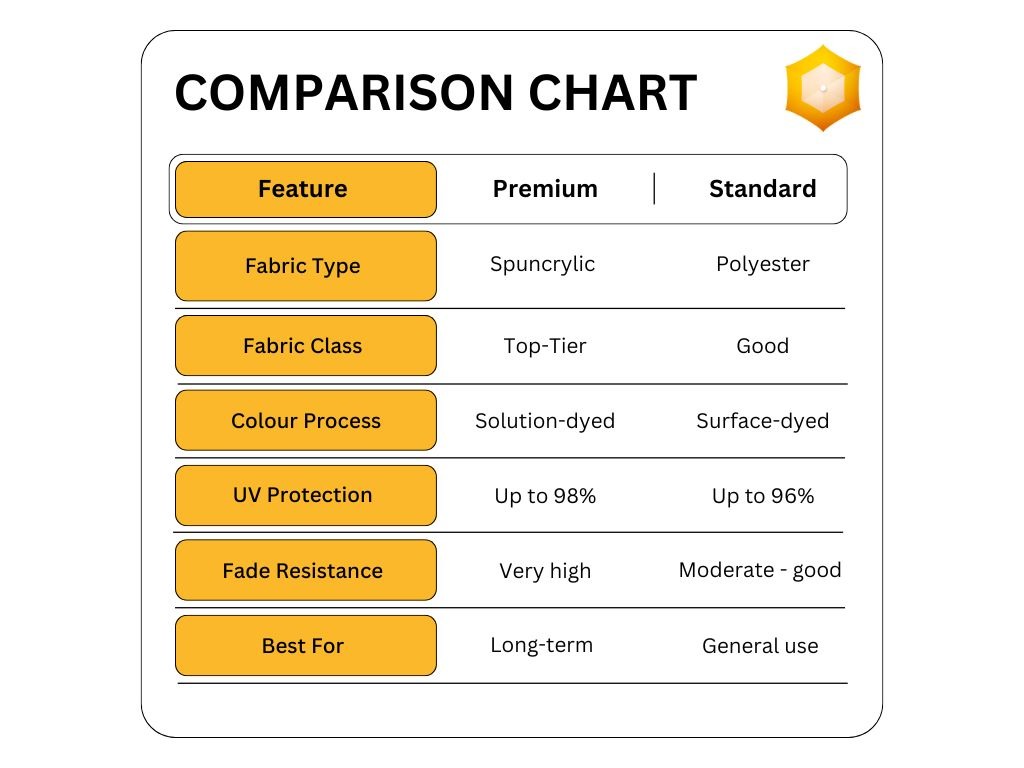
Platinum parasols offer a premium-grade fabric called spuncrylic. Typically, spuncrylic is available in a variety of colours such as faded black, havana taupe and manhattan grey. These colours are exclusive to the premium fabrics and are not available in standard fabric choices.
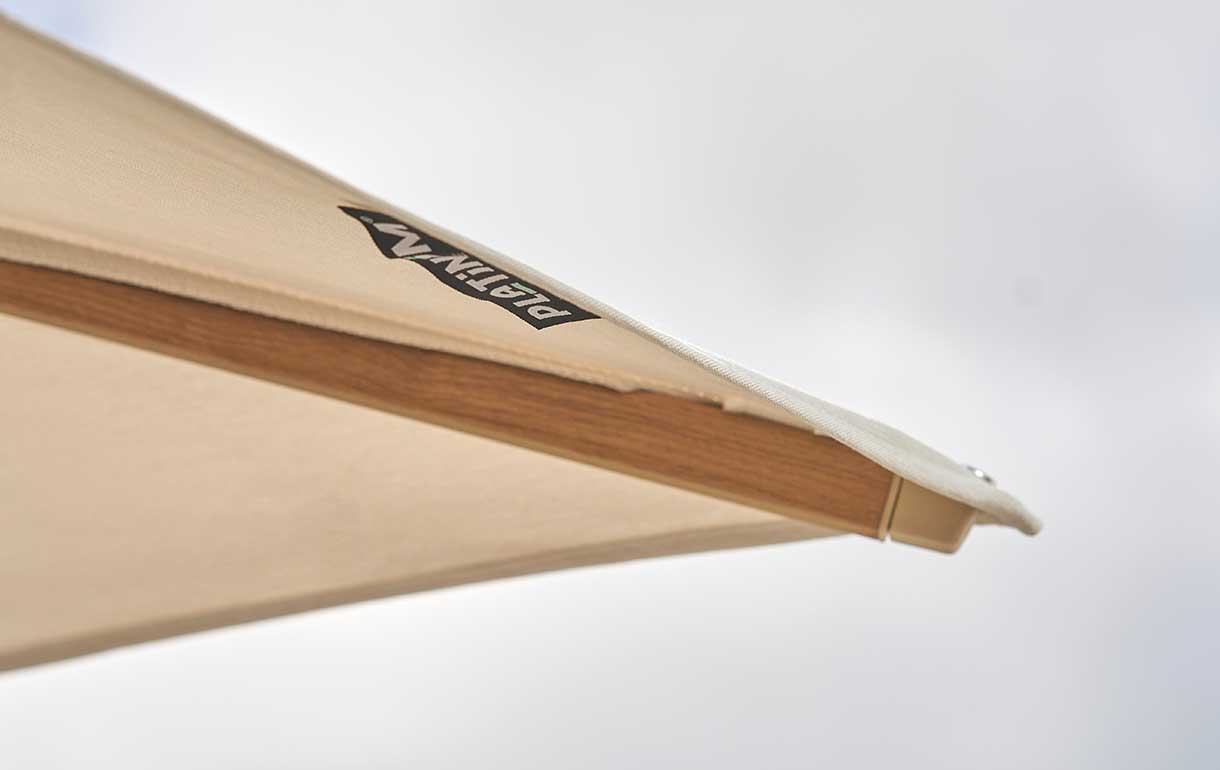
Platinum uses 240 gr. Spuncrylic fabric, this is a medium-weight synthetic fabric made from spun acrylic fibres. In simple terms, that means that the weight gives the fabric enough density so that it feels substantial without being rigid. This allows the canopy to drape neatly over the parasol spokes whilst maintaining strength. Spuncrylic is a thick fabric that is more colour stable and offers greater durability than polyester.
Key characteristics:
• Solution-dyed fibres are where colour is added during the fibre production rather than printed on the surface
• A heavier fabric weight gives the parasol a more substantial weight and refined appearance
• Up to 98% UV protection, among the highest UV protection levels commonly found in garden parasols
• Advanced coatings to improve water repellence and dirt resistance
• Very high colourfastness rating
Platinum standard fabric: Polyester
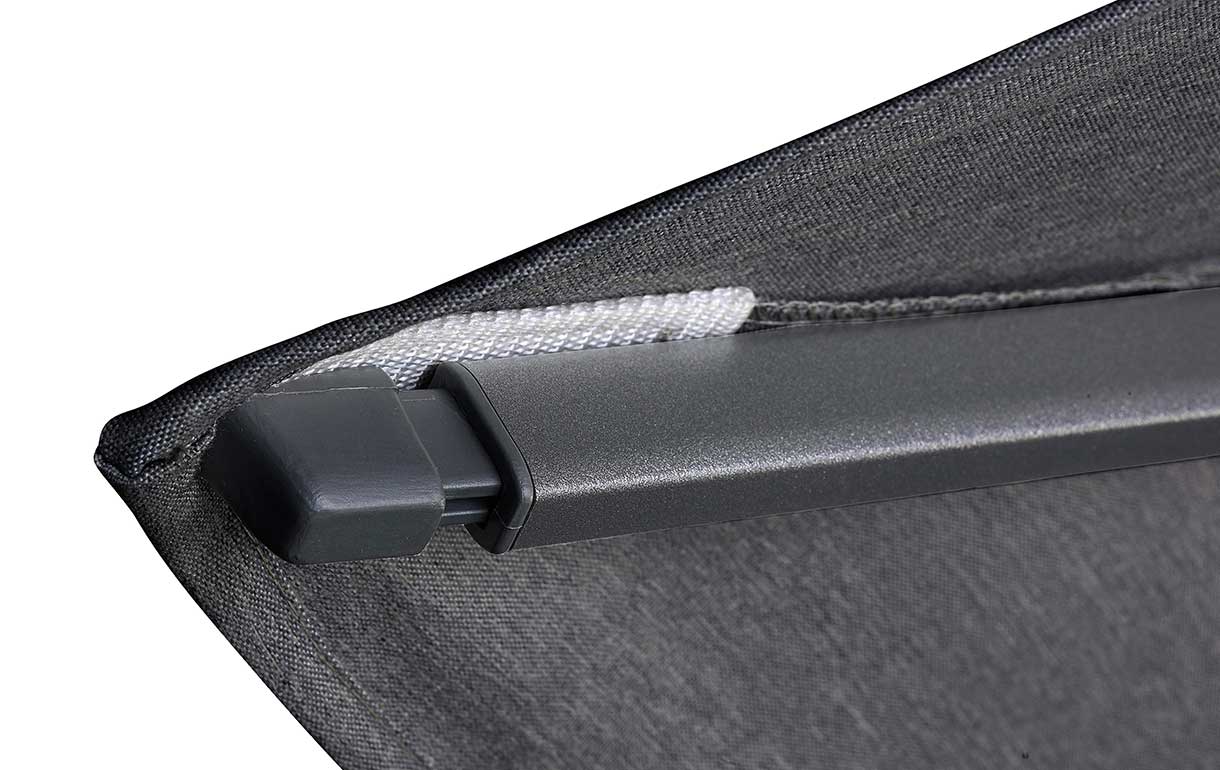
Platinum’s standard fabric parasols are made from polyester. Polyester is a practical and more cost-effective option for parasols, yet it still offers great protection.
Key characteristics:
• Surface dyed fabric is where the dye is only applied to the surface of the fabric, rather than being dyed through the entire fibre
• Up to 96% UV protection, providing reliable shade for outdoor use
• A durable water repellent coating is applied to help against light rain
• Heavy polyester fabric with good colour fastness
Key differences at a glance
What is solution-dyed fabric?
Solution-dyed fabric is made by adding the colour directly into the acrylic fibres before they are spun, ensuring that the colour is present throughout the entire fabric. This process makes the fabric highly resistant to fading and able to maintain its colour under prolonged sun exposure.
Solution-dyed fabrics, such as spuncrylic, are ideal for long-term outdoor use. Although they are more expensive than surface-dyed fabrics, they offer far superior longevity and performance.
What is surface-dyed fabric?
Surfaced-dyed fabric is made by first weaving the polyester fibres and then applying the dye to the surface. This produces excellent colours but at a lower cost. However, as the dye is only present at the surface, this means that the fabric is more prone to fading than solution-dyed fabric.
Thanks to the polyester fibres that are used, the fabric still offers good UV and weather resistance. To protect the colour, we would advise you to use a parasol cover when you are not using the parasol. This will reduce the amount of time that the canopy is exposed to the sun.
Why fabric choice matters
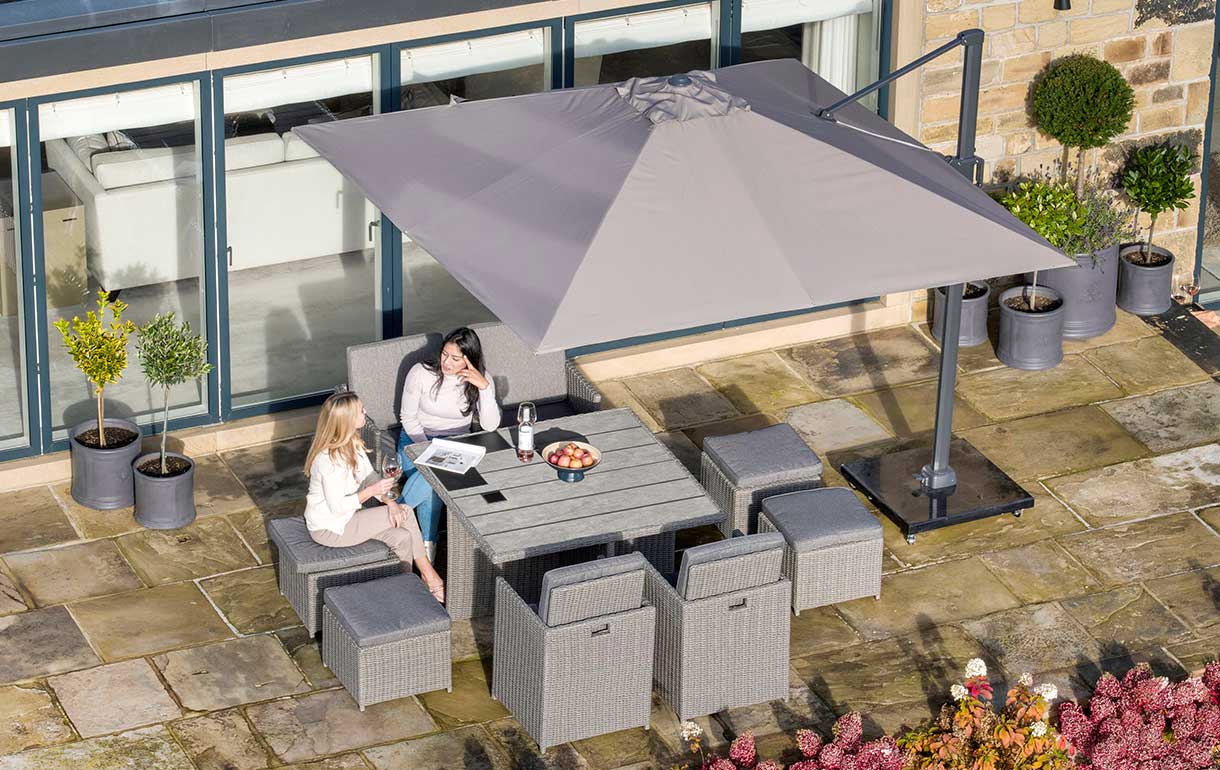
Parasol fabric directly influences how well your parasol performs throughout the year and how long it continues to look good. Key factors such as UV protection and colour fastness all depend on the type of fabric used.
Colour Fastness
Colour fastness is a critical factor for maintaining the aesthetic appeal of your parasol over time. Higher-grade fabrics maintain their colour for longer when exposed to sunlight. Whereas lower-grade fabrics are more likely to fade under the same sun exposure.
Premium fabrics use solution-dyed fibres, meaning that the colour is integrated into the fibres themself rather than being applied at a surface level. Solution-dyed fabric designed to retain colour significantly longer under prolonged UV exposure, and can withstand hundreds of days of sun exposure without noticeable fading. Standard fabrics typically use surface-dyed methods, which will fade more quickly under consistent sun exposure.
From our experience supplying Platinum parasols to domestic and hospitality customers over the years, we know that our customers want a high-quality product that will continue to look good. That’s why colour fastness is an important part of your fabric. Fabrics that resist fading preserve that initial aesthetic appeal.
UV Protection
Alongside this, you have to consider the UV protection rating of the fabric. Fabrics that have a higher UPF rating offer superior protection against harmful UV rays. It’s important to note that not all parasols offer the same level of UV protection.
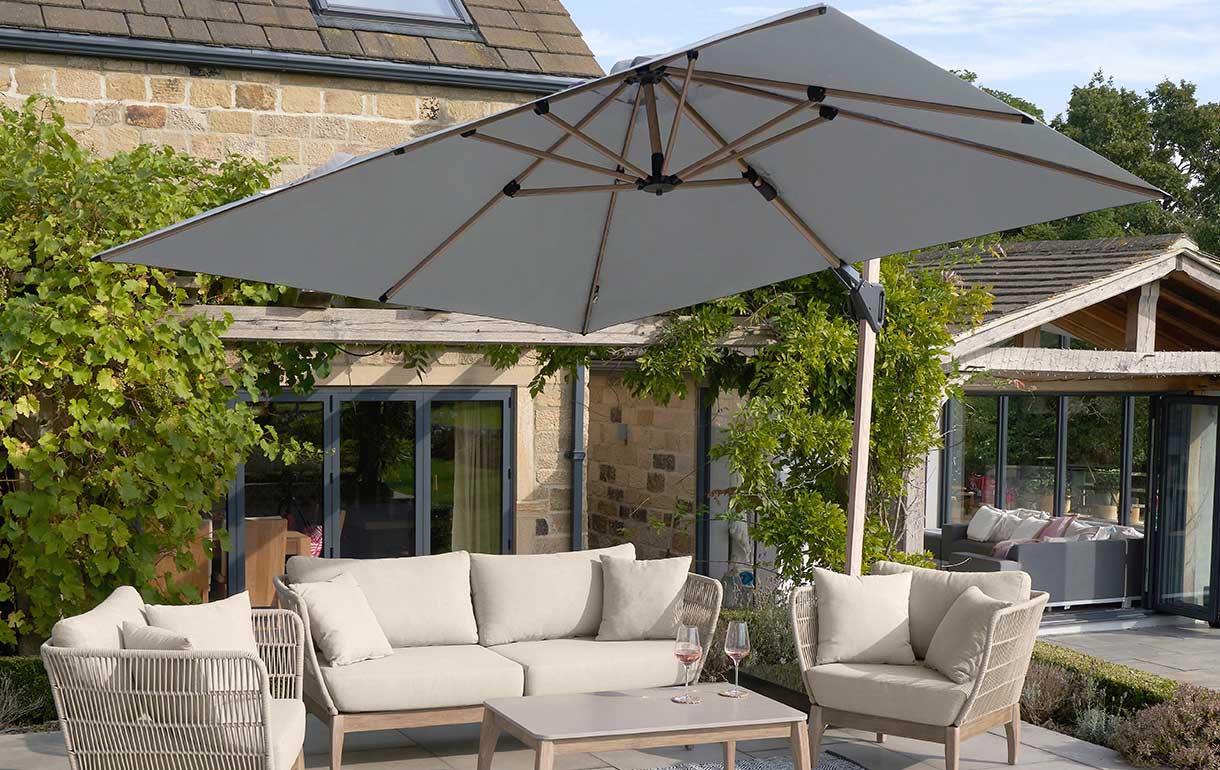
Premium fabrics, such as spuncrylic, provide up to 98% UV protection. This means that the fabric blocks the majority of harmful UV rays, therefore significantly reducing the risk of long-term skin damage. Platinum standard fabrics still have an excellent UV rating; they offer effective protection against up to 96% of harmful UV rays. The UV protection percentages show how much harmful UV is blocked by the fabric. Therefore, a canopy rated at 98% only allows 2% of UV rays to pass through the canopy. Whereas a 96% rating means that the fabric allows 4% of UV rays through. Look out for terms such as UPF 50+, as this is a recognised term for fabric with a 98% UV protection rating. Equally, the term UPF 30 is used when referring to fabric that offers a protection rating of 96%. Platinum parasol fabrics are tested to the BS EN 13758-1 standard for UV protective textiles.
Fabric choice matters because it is about more than simply providing shade. Parasols need to actively protect everyone underneath them; this is why we think that UV protection should be a key consideration when choosing your fabric. As a parasol specialist, we always stress the importance of UV protection when choosing your parasol fabric. We know how important it is that your parasol provides a safe and comfortable retreat during prolonged sun exposure.
Water Resistance
Whilst parasols should not be used during rainfall, we still believe that water resistance is an important factor when choosing your garden parasol. There are plenty of occasions when you might experience sudden showers or even morning dew. Platinum understands the importance of water resistance, which is why both of their standard and premium fabrics are treated with a durable water repellent coating. In some cases, they even add PU finish to help the moisture bead and run off of the canopy rather than soaking in.
One common misconception is that parasols can be waterproof, and we often hear our customers saying this. However, no parasol is truly waterproof like a rain umbrella is. Parasols are not designed to protect you from the rain; they are designed to protect you against sun exposure. However, water repellent coatings aid in repelling light rain and reducing water absorption. This helps to prevent the canopy from sagging, staining and preventing mildew.
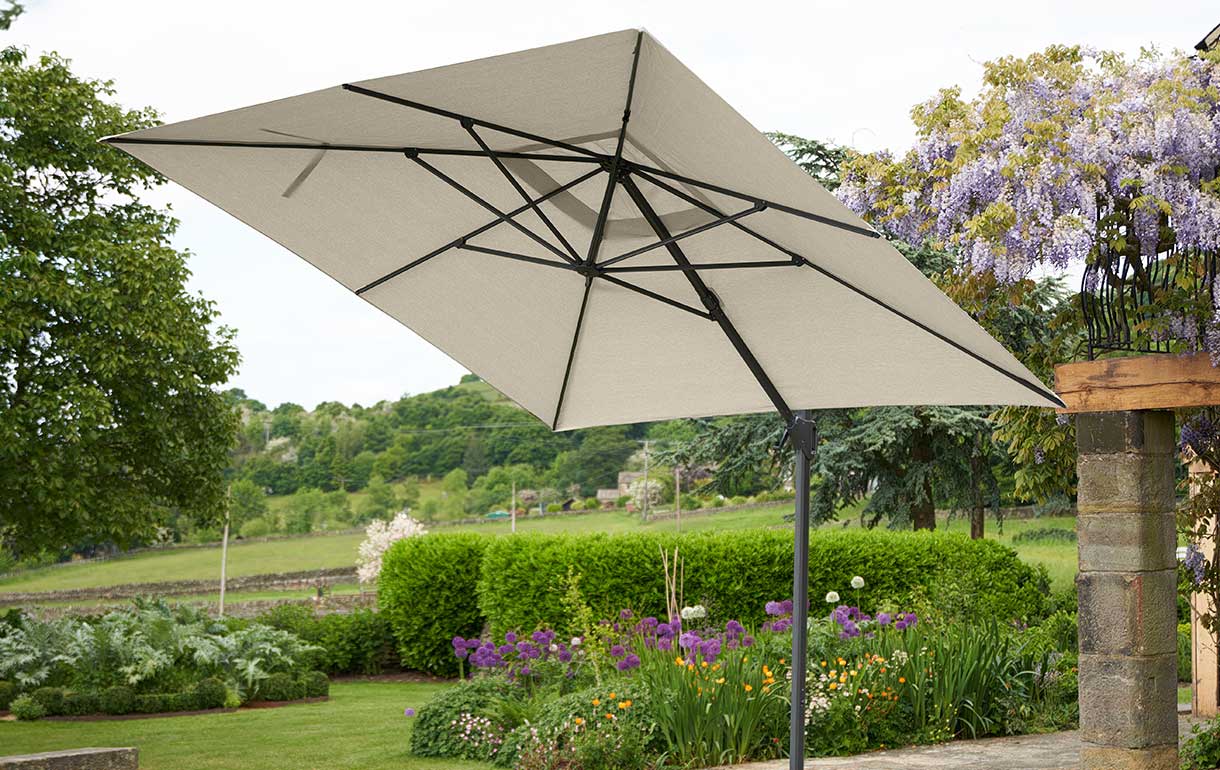
When speaking to customers, we always highlight water resistance because a parasol that can repel moisture will stay cleaner for longer and last longer.
What fabric should I choose?
From our perspective, the right fabric choice comes down to how the parasol will be used and the conditions. Factors to consider include sun intensity and frequency of use.
Fabric Decision Checklist
When choosing between premium and standard parasol fabrics, consider the following:
Sun exposure:
Will the parasol be positioned in full sun?
> Premium fabrics are better suited to strong and consistent sunlight
Usage frequency:
Will the parasol be used daily in summer or left open for long periods of time?
> Both fabric choices are suitable for long-term use
Longevity:
Do you want a parasol that can maintain the colour for longer?
> Premium parasols offer superior colour fastness
Budget:
Is value for money a priority?
> Standard fabrics offer excellent performance and durability at a better price point
Maintenance:
Do you want a fabric that stays cleaner and requires less upkeep?
> Premium fabrics benefit from enhanced coatings for dirt and water resistance.
Answering these questions can help you determine what your priorities are when choosing your fabric. Understanding what you truly need from a fabric will make the decision simple. By considering factors such as sun exposure, budget and maintenance, you can confidently choose between a standard or premium fabric.
Quiz: Which Platinum Parasol Fabric Is Right for You?
Answer these questions below and see what fabric best suits your needs.
1) How much direct sunlight does your parasol get?
A. Full sun for most of the day
B. A mix of sun and shade
2) How often will the parasol be used?
A. Daily or very frequently during the season
B. Occasionally or mainly at weekends
3) Will the parasol stay outdoors for long periods?
A. Yes, it will remain outside most of the season
B. No, it will be stored away when not in use
4) How important is long-term colour retention to you?
A. Very important, I want it to look great for years
B. Nice to have, but not essential
5) What best describes your priority?
A. Long-term performance and durability
B. Value for money and everyday practicality
Your Results:
Mostly A’s:
Platinum Premium Fabric is the right choice for you. It offers superior UV protection, excellent colour fastness and long-term durability. This is ideal for parasols exposed to strong sunlight and frequent use.
Mostly B’s:
Platinum Standard Fabric will suit your needs well. It provides reliable shade, good weather resistance and excellent value, making it a practical option for casual or seasonal use.
To conclude, choosing the right parasol fabric is about first understanding your needs and priorities. From there, you need to find the right balance between durability and style. Regardless of which fabric you choose, understanding the differences ensures you get a parasol that not only meets your needs but also enhances your outdoor space.
About the Author

Chloe Shaw is a Garden Furniture & Conservatory Furniture Specialist with many years of experience working at JB Furniture. Chloe combines her deep knowledge of garden furniture trends with her talent for creating engaging and informative content. She loves sharing inspiration, design tips, and product insights to help readers transform their gardens and conservatories into beautiful and inviting retreats.
Login and Registration Form