






How Much Shade Do You Really Need? A Parasol Umbrella Size Breakdown
-
 How To Weigh Down A Cantilever Parasol September 3, 2021
How To Use A Cantilever Parasol June 7, 2024
How to Choose the Best Position for a Garden Parasol July 18, 2023
How Much Shade Do You Really Need? A Parasol Umbrella Size Breakdown February 20, 2026
What To Look For When Buying A Garden Parasol? June 29, 2024
How To Weigh Down A Cantilever Parasol September 3, 2021
How To Use A Cantilever Parasol June 7, 2024
How to Choose the Best Position for a Garden Parasol July 18, 2023
How Much Shade Do You Really Need? A Parasol Umbrella Size Breakdown February 20, 2026
What To Look For When Buying A Garden Parasol? June 29, 2024 -
What Size Parasols Do Customers Actually Buy? May 30, 2026
How Much Shade Do You Really Need? A Parasol Umbrella Size Breakdown February 20, 2026
Platinum Parasol Fabrics Explained: Premium vs. Standard February 3, 2026
What To Look For When Buying A Garden Parasol? June 29, 2024
How To Use A Cantilever Parasol June 7, 2024


Monthly Archive
Categories
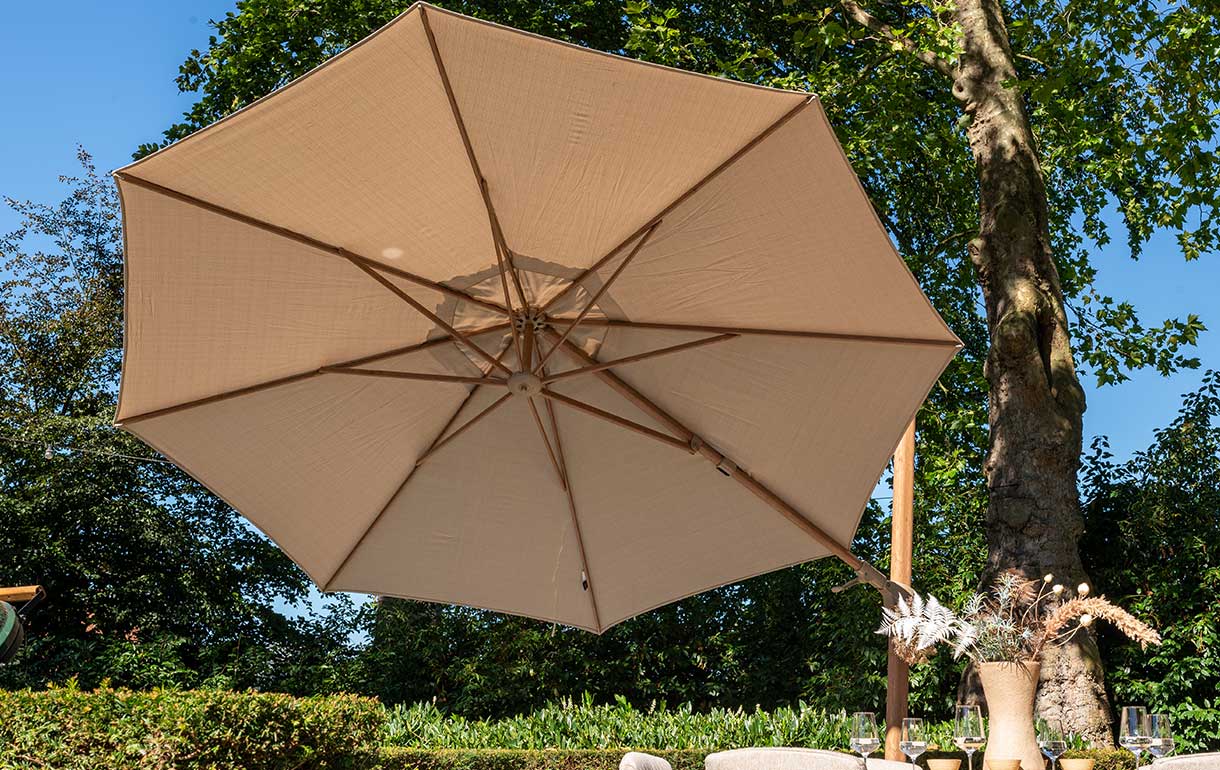
When the sun begins to shine, we all want to sit outside. However, too much direct sunlight can quickly make you uncomfortable. That’s where your parasol comes in; they offer shade and UV protection. Now, the important question is: how much shade do you really need?
When choosing the right parasol, you need to consider what area you want to shade and how large the area is. Then you can consider other aspects such as colour.
Think About What You’re Shading
First, you need to think about what you are going to want to shade in your garden. Before you begin to measure, ask yourself:
• Are you shading a corner sofa set?
• A hot tub?
• Or a play area?
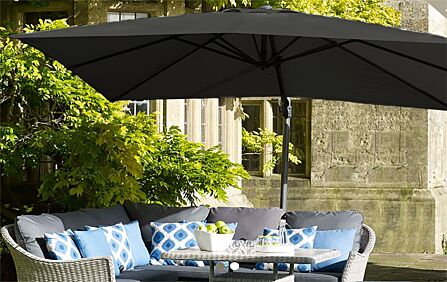
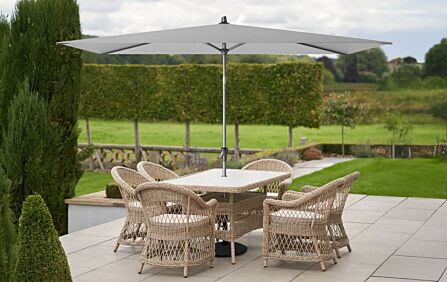
Once you have figured out what area you want to shade, you can get your measuring tape out. Your parasol umbrella must cover the entire usable area, not just one corner. One top tip is that you should look at getting this to extend beyond your furniture or usable area by around 50-70cm on all sides. This is to account for the changing angle of the sun as the day progresses.
Parasol Size Guide
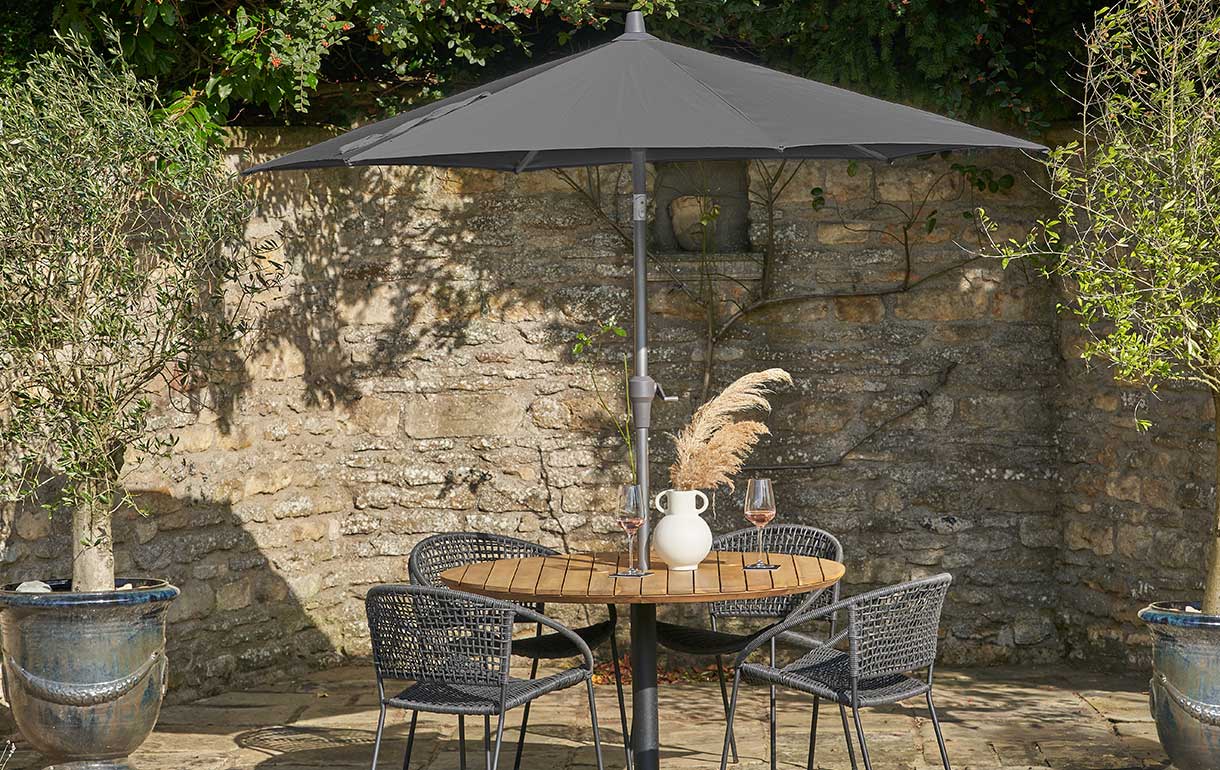
2m - 2.5m Parasol
Best for: Bistro sets or recliner sets
Parasols measuring 2m to 2.5m are excellent for keeping smaller garden sets in the shade, such as bistro sets. This size range is better suited to providing focused shade. 2m to 2.5m parasols are good for more modest gardens, balconies or cosy corners. If you are limited for space, this is a more practical choice. In our experience, this size range tends to be more common in table parasols. Whereas, cantilever parasols tend to measure at 2.5m upwards.
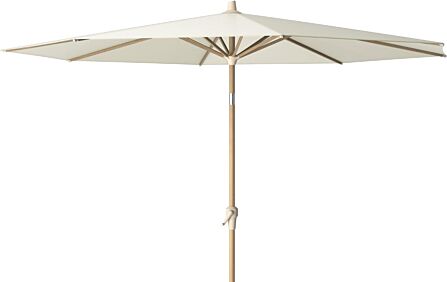
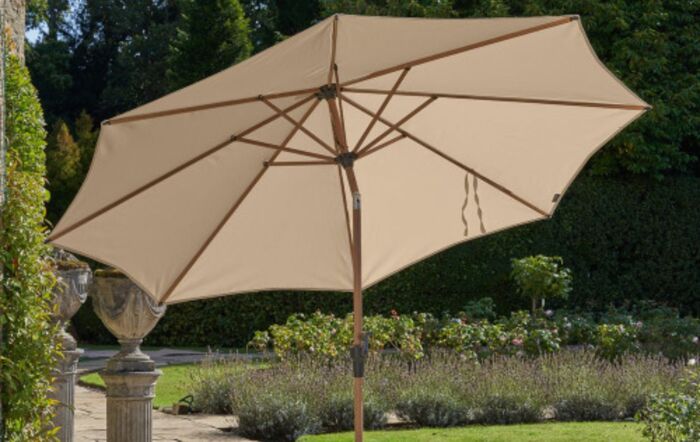
Tip: Centre pole parasols are always better supported when they are placed within a dining table. Otherwise, you may need to use a heavier base.
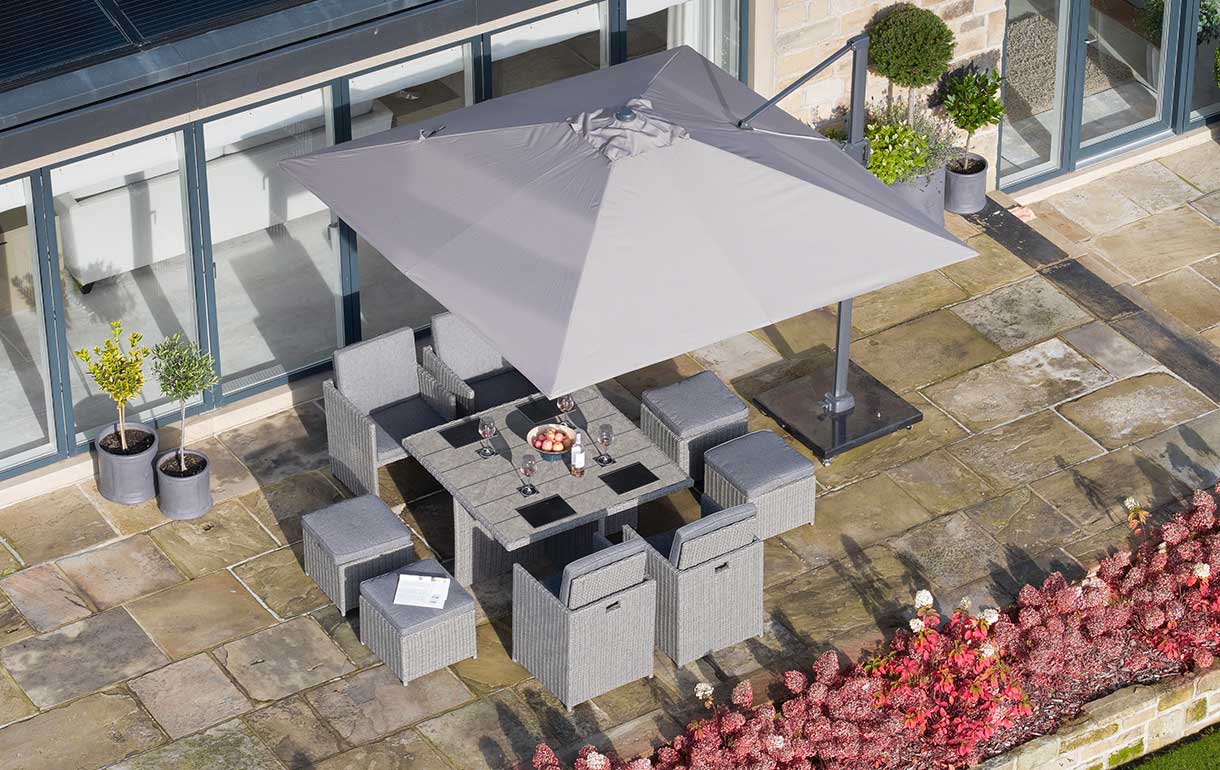
2.7m - 3m Parasol
Best for: Four-seat dining sets or compact corner sets
This size range is the most popular and is suitable for most garden furniture configurations. 2.7m to 3m parasols are available as either a centre pole parasol or a cantilever parasol. These parasols provide ample coverage, allowing you to stay in the shade even when you pull any seats out. At Just Parasols, we often speak to customers who are unsure of what size they need. We would always recommend going for a parasol with this size range; these sizes are suitable for the most popular garden furniture set-ups.
Tip: Look for parasols that tilt and rotate; this gives you even more flexibility. They may be called T2, which means that it rotates 360 degrees and can tilt in four directions.
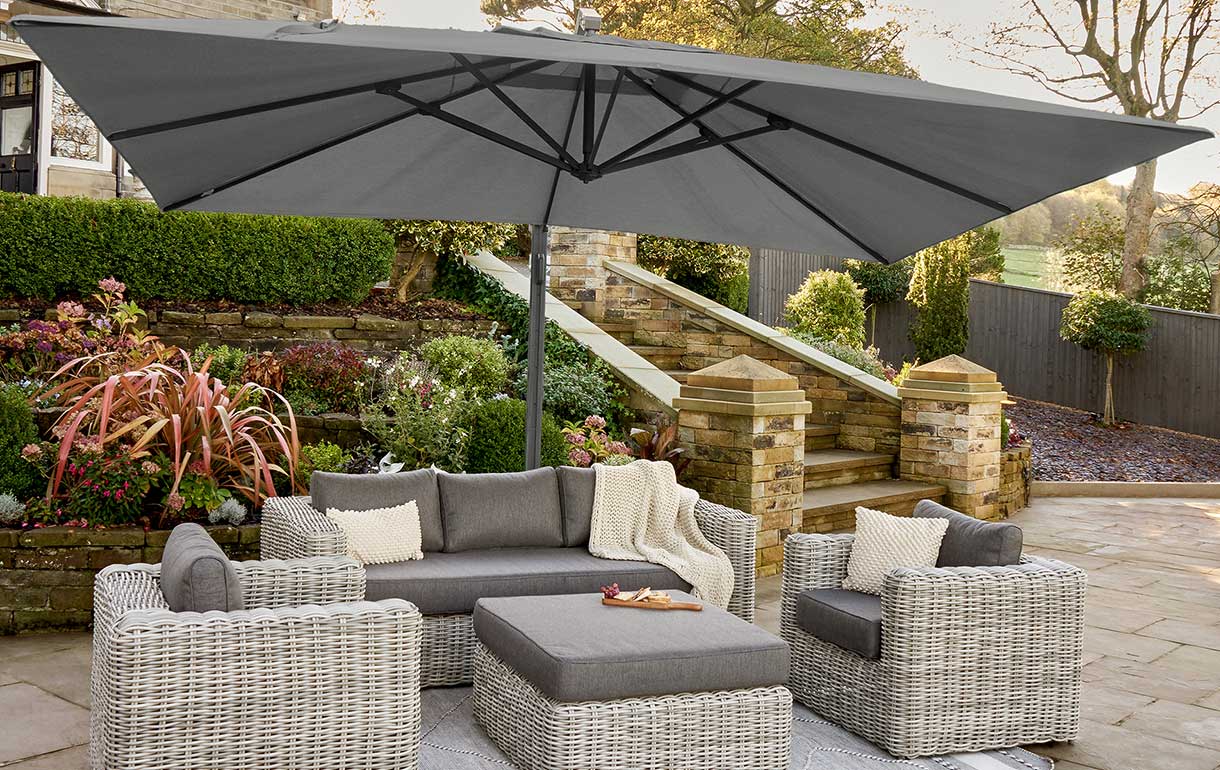
3m - 3.5m Parasol
Best for: Large L-shaped sofas or large entertaining spaces
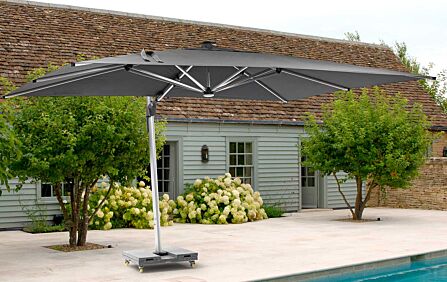
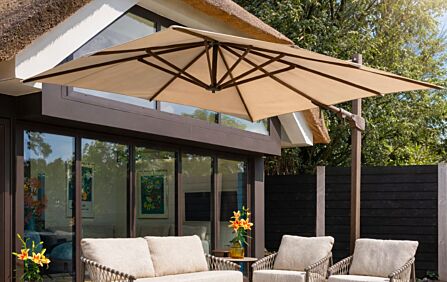
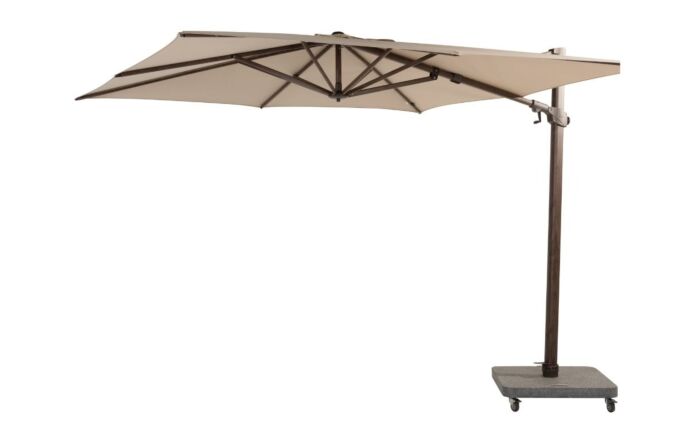
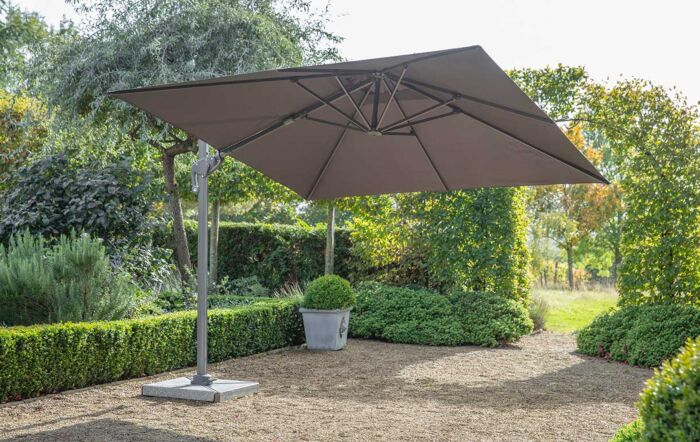
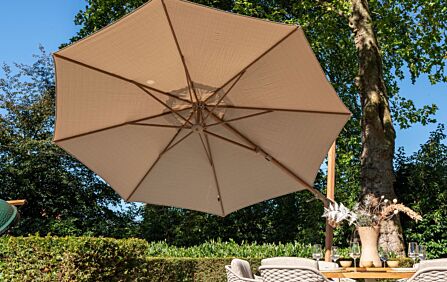
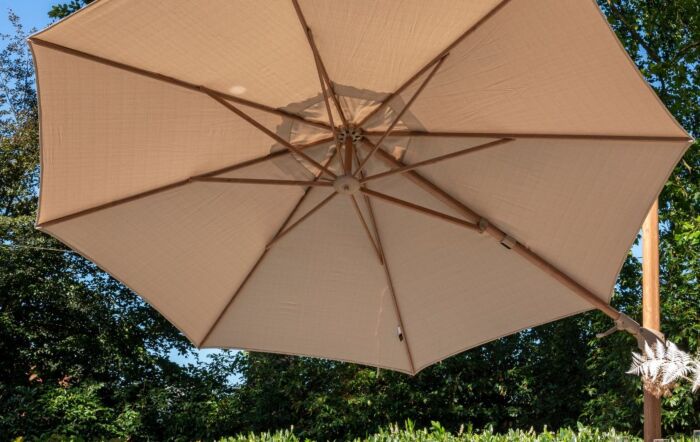
If you have a garden that is focused on hosting guests and entertaining, then you might want to consider a larger parasol. Parasols within this size range are excellent for providing shade for large 8-seat dining sets, L-shaped sofas and U-shaped sofas. Similar to what we mentioned above, this size range is available in either a centre pole parasol or a cantilever parasol. If you want something that is more flexible and can be moved around your space, we would advise you to go for a cantilever parasol. This is because the cantilever parasol has an offset pole, so you can easily position it over your entertaining space. Whereas a centre pole parasol would need to be situated right in the middle of your space and could spoil the overall look of your outdoor living space.
Tip: For larger parasols, we recommend that you choose a granite base; these heavy bases will keep your parasol supported. Some even include wheels for extra flexibility.
Round vs Square vs Rectangular
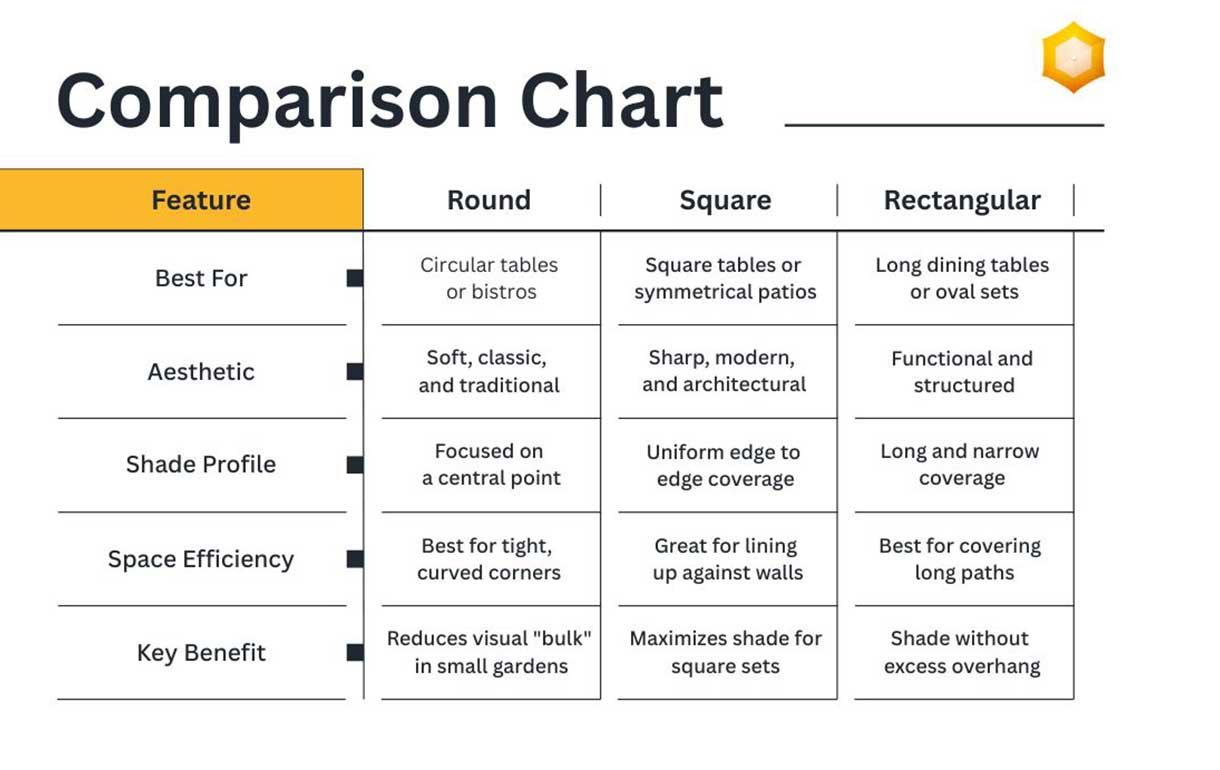
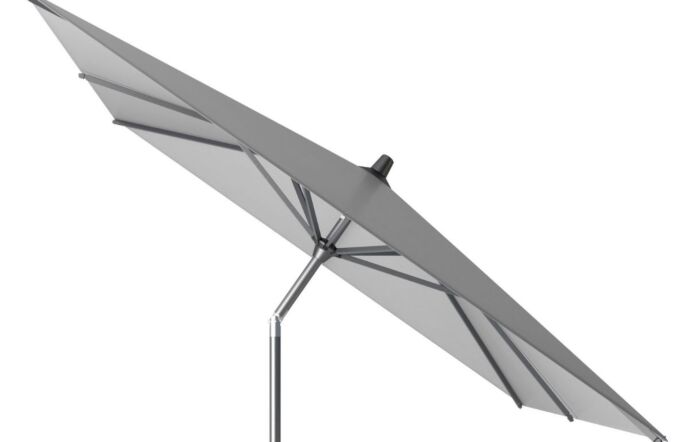
We can’t discuss shade without taking into consideration the shape of the canopy. Shape can influence several factors, and it can stop you from unnecessarily sizing up. Check out our comparison chart below where we compare round, square and rectangular parasols.
Don’t Forget Sun Movement
This might sound like we are stating the obvious here, but this is something that many of our customers overlook. The sun moves.
If you want to keep shaded throughout the day, you must consider the sun's movement in your garden. To combat this, there are a few things you can look out for. Look for a parasol that has all or one of the following:
• A parasol with a wheeled base
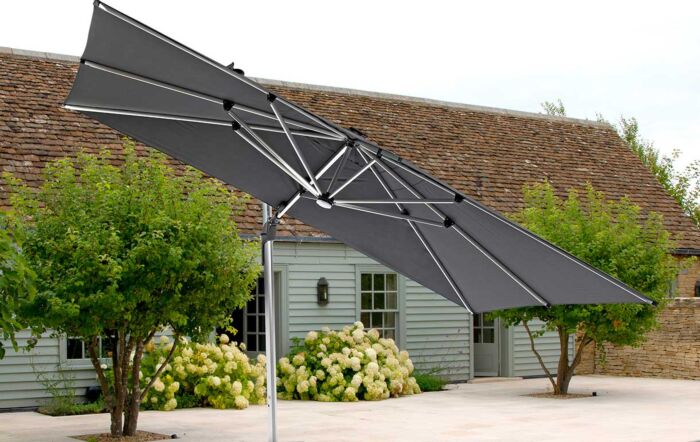
• A parasol that can tilt
• A parasol that can rotate
Before you consider sizing up to a parasol that might overwhelm your space, look out for the features we have mentioned above. Both table and cantilever parasols are available with a wheeled base. Wheeled parasol bases allow you move the parasol across your patio as the sun moves throughout the day.
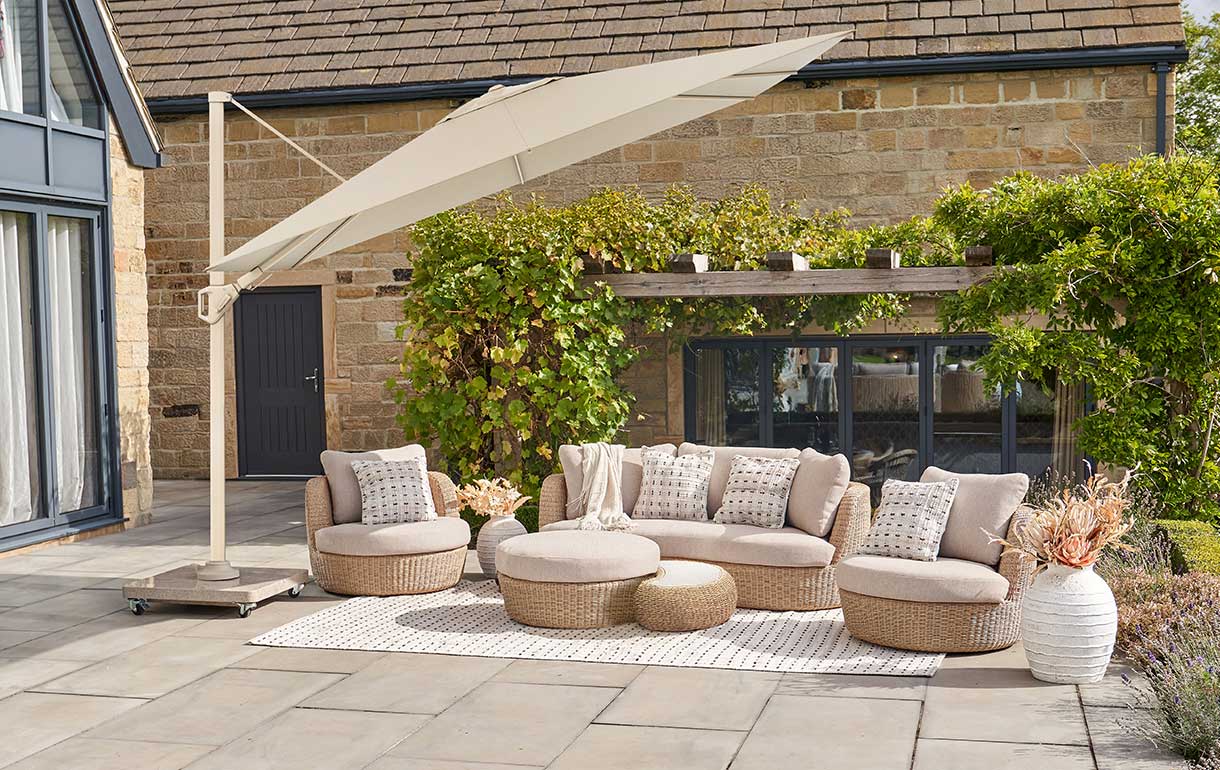
Look out for the terms T1 and T2; you will often see these used when describing cantilever parasols. Lets breakdown what they mean below:
-
T1 Parasols - rotate 360 degrees and tilt up and down
-
T2 Parasols - rotate 360 degrees and tilt up, down, left and right
If you’re looking for maximum manoeuvrability, we would recommend T2 parasols. T2 cantilever parasols can very easily be moved and angled to protect you from the sun, even when it moves.
Measuring Your Space Properly
It’s crucial that you correctly measure your space before buying. Choosing a parasol that is too small won’t provide enough coverage, while one that is too large will make your space feel cramped. Taking a few extra minutes to measure your space properly will save you from disappointment.
First, you need to measure the width and length of your seating or entertainment area. Be sure to measure your entire seating area, not just your table. Then add at least 1m to that measurement. This allows you to have full coverage when seats are pulled out. So, for example, if your space measures 180cm wide, you want a parasol that covers around 280cm to 300cm.
Make sure to check clearance for walls or fences. This will help you be sure that when you angle your parasol, so it does not hit any obstructions. Don’t forget to check for nearby trees and door clearance, in particular bifold doors. Following on from this, don’t overlook where you will place the base. You need to ensure the base is not a trip hazard.
When customers visit our showrooms, they often comment on how large the parasols seem. Believe it or not, your parasol will look smaller when it is open outdoors than in a showroom.
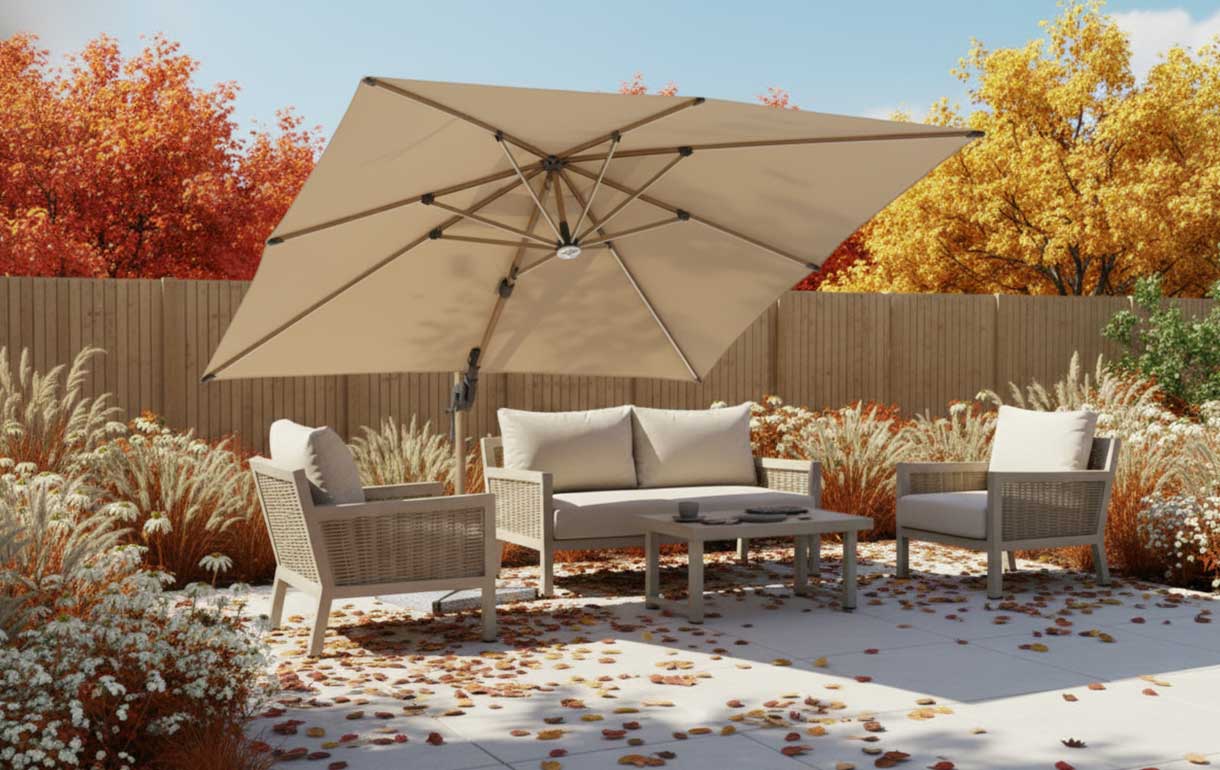
So…How Much Shade Do You Really Need?
Let’s briefly sum this up! If you mostly:
• Enjoy your garden on a bistro set - a smaller parasol works fine
• Host family meals - look at a 2.7m to 3m cantilever parasol
• Entertain large gatherings - consider sizing up for comfort and flexibility
• Want all-day flexibility - only look at cantilever parasols
Parasols are more than just an accessory; they are vital for creating a comfortable outdoor space and protecting you from UV rays. Parasols help you create a space that you can actually use and enjoy.
About the Author

Dave Sadler is a garden parasol expert with a passion for outdoor elegance and functional design. With years of experience in the garden furniture and parasol industry, he’s become a go-to expert on all things parasols - from choosing the perfect shade solution to seasonal styling tips.
Login and Registration Form